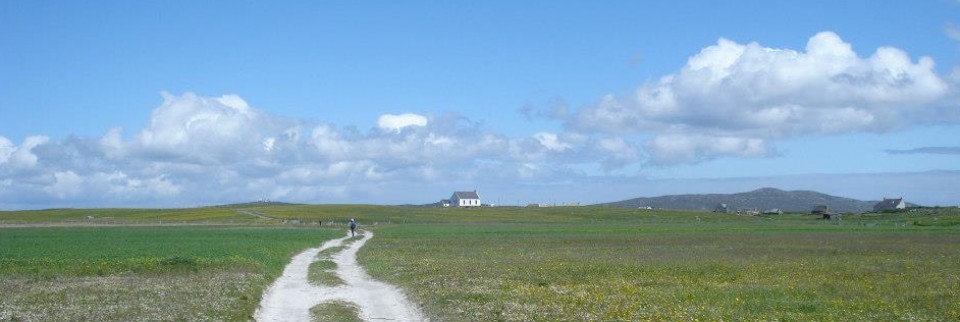
This entry is probably far too long to be considered a Blog Post. However, ignoring that possible breach of on-line etiquette, and because I have just renewed Christine’s web-site domain, here is her commentary on her memories of Farnell Primary School that she wrote in April 2011. I’m pretty sure that she didn’t blog this earlier . . .
The genesis of this essay was a proposal (by a person or persons now forgotten) to create a written record of the history of Farnell, which is a hamlet some six or seven miles west of Montrose in the Scottish County of Angus. For this, there was a meeting in Farnell of interested/invited parties to discuss the project, out of which came Christine’s essay.
And what of the whole project? As far as I know, nothing more was heard. However, I think that Chrissy’s account is interesting in itself, but also as a historical record of a time before Ofsted, Inset Days, and Internet Instruction.
Just a little more background: Christine started her Primary Education in Banchory, but, when her father moved Parish to Farnell in 1959, she began her attendance in the small village school, a few minutes’ walk from the Manse.
This what she wrote:
I attended Farnell School from 1959 to 1964. The “dominie” at the time was Mr Duncan McNicol, who was assisted by Miss Evelyn Simpson, who travelled out to the school every day on the bus from Montrose. I arrived into Miss Simpson’s Primary 3 in 1959 and found myself in a classroom which also contained Primary 1 and Primary 2. I then moved in 1960 through the connecting door into Mr McNicol’s room, where I remained until my primary education was completed.
Farnell was a very different world for me, as I had come from a big primary school with over 30 in my class, and here there were about 40 – 50 children in the entire school.
At that time the school consisted of two buildings. There was the original old school, now House of Farnell, which contained the dining hall, kitchen and drill hall. A new two-classroom school had been built beside it. The entrance hall of this building contained pegs, sinks and carbolic soap. The toilet block was behind the new school building and had no heating whatsoever, so that in winter the toilets invariably froze at times. The “missy”, as Miss Simpson was referred to, had her own toilet in the old school block, and Mr McNicol went home! Behind the toilet block there was a triangle of grass which we were allowed on only in the summer months. We had a large tarmac playground area round the two school buildings where we played games and made “slides” when it froze in winter. At the start of the day, at the morning break and at lunch time, Mr McNicol would stand at the door and ring a hand bell, waiting for us to line up in our classes. The new school was heated by a stove, and the milk bottles were often put beside it in winter so that the ice could thaw.
My class contained Rosemary Arthur, Margaret Tye, Jean Gibb, Brian Youngson and Malcom Ferguson. Each class contained about 6 pupils, and there were many brothers and sisters among us. We always sat in the order in which we had passed the last set of exams, with the person top of the class at the back. What was interesting was that, although we identified with a class within the building, these distinctions disappeared to a great extent in the playground – girls and boys would split for particular games, the older ones would look after the younger ones, and sometimes we would organise games that involved everyone; it had a true family atmosphere. That’s not to say there was no bullying, or that we didn’t fall out with each other at times, but in the main it was a happy place to be.
There were times when we were taught together – often first thing in the morning Mr McNicol would decide to teach a topic of interest to all. One I remember is that he turned the tap on and invited us to consider where that water had come from and the long journey it had made to get there! We sang together, usually under the direction of a radio broadcast like “Singing Together”, and would blast out “Men of Harlech” and “Heart of Oak”. And sometimes Mr McNicol would play the piano for us to sing along, usually a hymn to start the day. While we would sing with gusto in a group, it proved rather harder to get us to produce solos. Each year we were invited to sing for the Burns Society Award in the Singing of Scottish Songs; one by one we were invited out to the piano to see what we could do, and the awards were eventually made to those who could keep in tune and produce more than a squeak! There was also an award from the Burns Society for the reciting of Scottish verse.
Tuesdays and Thursdays were Handwork days, and in the latter part of the afternoon we were divided into boys’ and girls’ groups, with the girls going into Miss Simpson’s room to do knitting and sewing. There was a clear progression in the difficulty of the knitting and sewing; in Primary Three I knitted a scarf which did not capture my imagination. In Primary Seven we were expected to produce a pair of socks, including the skills of turning the heel and grafting the toe. The Primary Three sewing project was a lap bag in which to keep our sewing and knitting for the remainder of our time at the school, and in Primary Seven we made a cooking apron to take to secondary school with us. The boys’ handwork projects involved work with cane, making trays etc, and I think the girls always considered this more exciting. Before Christmas, we always produced a calendar with a picture of our choice and a “calendar tab” stuck on the bottom, and in early December we started work on making paper chains and lanterns to decorate the classrooms for Christmas. The decorations were the same every year and were never recycled.
Friday afternoon was Art time, which we all enjoyed; it seemed an appropriate relaxation before the weekend, not that school life in those days was in any way stressful. The subjects were often linked to the seasons, or indeed the news. I don’t only remember the day President Kennedy was shot; I remember painting Kennedy’s funeral. Once a year we entered the Brooke Bond Art Competition and my copy of “The Secret Garden” was bought from winning a book token for this.
Teaching several classes in one room is an organisational challenge for the teacher but is ultimately of great benefit for the pupils. The fact that we did all the above things across the age groups increased a kind of family atmosphere. There were other advantages to having three or four classes together. When we had finished the work set for us, we were invited to read a book or “Knowledge” magazine on our own, but for me this was also a time for listening in to what another class might be doing; in this way we got an insight into very grown up things like vulgar fractions before it was our time to learn the topic officially, and I think absorbing this intentionally or subliminally helped our education greatly. I remember an atmosphere of order and industry, and a great deal being quietly achieved. There was, of course, the deterrent of the strap for any misdemeanour.
The “three Rs” featured large – each day we worked from a reading book, learned some key words from “The Essential Spelling List” and had exercises from the “Sure Foundation” arithmetic book series. We graduated from writing with a pencil to dip-and-scratch ink pens; there were no biros or felt tips! A pencil, ruler, rubber and pen were kept in our “pencil packets”, stiff cardboard envelopes which were kept in empty National Dried Milk tins on the window sills at the back of each class. History, Geography and Nature Study were taught by copying a note down from the board, but I do not remember the topics being actively discussed. The day started with recitation of our tables – we would start one day with the 2-times table, and move on to the next one the next day, and when we had done the 12-times table we went back to 2, which was always done with great relief and some speed! The 10-times table was a particular favourite. We then moved through the weight, capacity and length tables before starting on the day’s work.
Sometimes there were special treats for us! The district nurse once visited us because she had been to Africa and had slides to show. And about once a month we had a filmstrip, usually illustrating the lives of famous Britons like Elizabeth Fry or David Livingstone. For these we were escorted over to the dining room in the old school building. The films, although black and white, were considered a real treat.
Sport and games were also very different from what we would have today. Mr McNicol took us over to the “drill hall” in the old school building and proceeded to lead us through a series of physical exercises. There was no sports kit apart from gym shoes (“jimmies”) and Mr McNicol himself led the proceedings still wearing his suit and normal leather shoes. We seemed to do a lot with beanbags, often in team games, and sometimes Mr McNicol sat back and let the radio programme “Music and Movement” do the work. In the summer, Primaries Four to Seven always played rounders together. Mr McNicol marked out the bases in chalk on the playground, and two people in Primary Seven were invited to pick the teams. This meant that if you could run fast and were older you would be picked first, and if you were in Primary Four and not at all athletic you would be standing there feeling very sorry for yourself at the end. We used a tennis racquet and tennis ball for the rounders. I didn’t enjoy it in Primary Four, but by Primary Seven I had speeded up and improved my catching and was picked first rather than last to join the teams.
In the summer we had a sports day and school picnic – sometimes we went away for this, but it could also be in a local field, eg at Farnell Mains. There were sack races, egg-and-spoon races and dressing-up races.
Trips and outings had to be saved for! Occasionally there was a trip to Edinburgh, and for this we took along a shilling a week which was marked up on a card until we had the pound necessary to participate. It was a lot of money in those days. I remember going to Edinburgh and visiting the Zoo, Holyrood House and the Castle all in one day, finishing up with fish and chips in a hotel on Princes Street before we got the train back to Montrose.
Fiona Hogg, the nurse who had come with the slides of Africa, also visited once a month to check us over – nails and hair were thoroughly examined in the entrance hall, which always smelled of carbolic soap. The minister came once a month to give a short service and address. In addition to the school teaching staff, we also had Mrs Macintosh cleaning for us and Mrs Arthur serving the dinners.
One thing that was interesting for me was the bilingual nature of the school in which I had arrived. I had come from a school where Scottish dialect was not spoken, but here all the children spoke in the vernacular and asked me on my first day if I was “English”! Scottish dialect was spoken in the playground, but in the classroom the children automatically switched to “proper” English. In an attempt to disprove my classmates’ theory of my origin, I adopted the dialect as quickly as I could – I don’t remember making a conscious effort, just slipping into it in the way that children easily do. Perhaps this early experience of a “foreign” tongue helped me to become a linguist in later life.
The playground was the focus of many games – we did not sit about, but were very organised in entertaining ourselves. If a particular game was proposed, someone would walk round shouting “join on” until you had enough people. A particular favourite was “bully horny” – I have never been able to find a reference to this game elsewhere, and its name always intrigued me, but it was basically chain-tig. Another was called “ten a foxy”, and I am not sure of the spelling! One person was the fox, and the others had to cross the playground without being nabbed by him. If the fox caught you, you had to get away before he had counted to ten. There was also “grandfather’s footsteps”, which I think is well known. The girls were left in no doubt as to where they stood in the scheme of things – any “join on for bully horny” chorus was always followed by the words “lassies ahint”. The girls of course also did skipping, with rhymes such as “I am a girl guide dressed in blue, see all the actions I can do”. Winter brought a frozen playground and the eagerly anticipated “slidies”. I went home for lunch, but, on the days when there was a “slidy”, rushed back to school as quickly as possible. You could do a plain slide, a “wee manny” (which meant crouching down at the end) or “turning the key in the lock” (which involved turning round 180 degrees as you travelled).
Once a year we were invited to collect rosehips from the hedgerows; these were sent off to make rose hip syrup. As there were not enough rosehip bushes around Farnell to yield enough for everyone, this involved persuading your parents to take a drive out somewhere to find some! We were rewarded with 3d a pound, and if you collected ten pounds of rosehips you got a Rose Hip Collector’s Badge. There was a poster on the classroom wall of an empty bottle which was gradually shaded in as the school’s rosehip tally went up.
In our final year at school we sat the eleven plus and departed to various secondary schools in the area. I went on to Montrose Academy, but the majority went to Brechin High School or to Friockheim, which was then termed a junior secondary. The exam involved an essay, arithmetic and an IQ paper, and I remember the day when Mr McNicol proudly announced to our class that we had all been accepted for the course which we wanted to do. I left proud of the primary education I had at Farnell. It has stood me in very good stead, as have the skills of mixing with people of different ages. And I still know how many chains there are in a furlong and how many yards in a mile.




 Harping On