Thanks to Ink Pantry Press for featuring an article about my blog today on Open Mic Monday.
How this blog happened
29 Monday Dec 2014
Posted in Writing News
29 Monday Dec 2014
Posted in Writing News
Thanks to Ink Pantry Press for featuring an article about my blog today on Open Mic Monday.
15 Monday Dec 2014
Posted in Musical notes
Tags
Charlotte Petersen, Edinburgh International Harp Festival, Eldra, Harps North West, Higham Hall, Mary Dunsford, Robin Huw Bowen, Telynau Teifi
It’s finally time to have a blog post about harping. I seem to have done a lot of it as Christmas approaches, culminating in Harps North West’s fine Christmas Party and Concert yesterday.
Six years ago I didn’t harp at all. Someone suggested a beginners’ workshop with Harps North West might be fun, and I went along. Instantly hooked, I embarked on an intensive series of workshops and lessons, culminating in achieving Grade 6 on the instrument. After that the exam pieces just started to get longer, so I decided to call a halt on this and just enjoy the music. I already played the piano, which helped the learning curve.
Harps North West http://harpsnorthwest.org.uk is a charity promoting appreciation of the harp in all its various forms – the pedal or concert harp, the clarsach or lever harp (sometimes known as the folk harp), the electric harp and even the cardboard harp, an easy and inexpensive way of making a start on the instrument. Mary Dunsford, current convener of Harps North West, plays all four and I’d like to thank her for letting me use two of her photographs. Her young son is already plucking the cardboard harp!


The soundbox on Alfie’s harp is made of cardboard, but it still produces a lovely sound! This harp has been personalised by Alfie’s mum with cartoons from the Beano, all featuring different sound effects – ‘pow’, ‘zzzzip’ and many more. He’s going to be a great player.
I play the clarsach or lever harp and, although I’m Scottish, I opted for a Welsh one, beautifully made by Telynau Teifi of Wales, a great firm to deal with. My folk harp, the ‘Gwennol’ (which means ‘swallow’) has a wonderful big sound box and an impressive sound for its size.
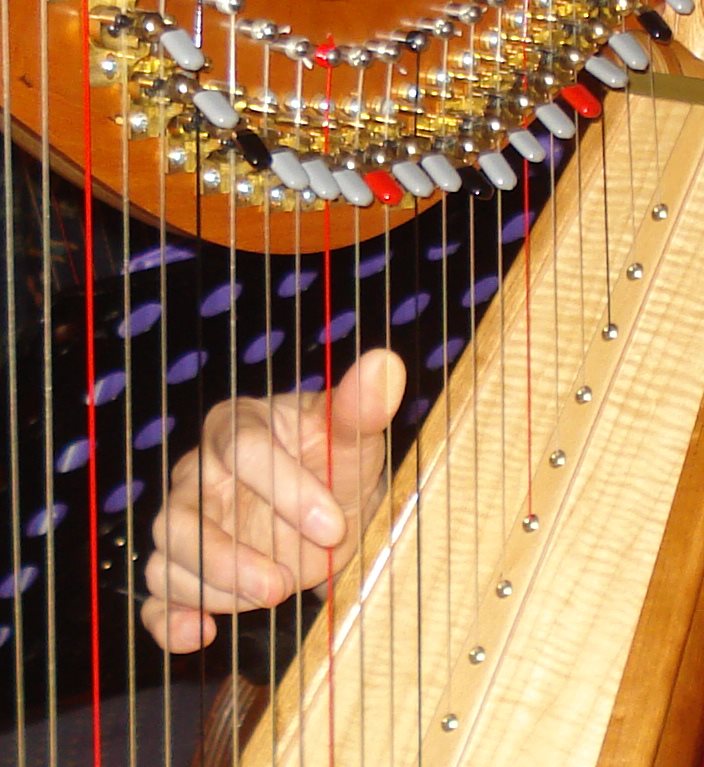
The levers are used to raise the pitch of each string by a semitone, and before we play a piece we need to set the levers for the key it is in. If you miss one, it’s painfully obvious in the playing… Pedal harpists don’t have these issues as the key changes are all done with the feet. My harp has 34 strings and a range of nearly 5 octaves. Every string has to be tuned before a performance.
There were a few surprises for me with harps. First of all, they are suited to an enormous variety of musical genres – classical, folk and jazz all sound good! Secondly, it can be a solitary instrument if you want, but it’s also great for group playing. I was surprised to discover just how many people play this instrument, and how sociable and friendly the harping world is. The best place to meet harpists from all over the world is at the Clarsach Society’s Edinburgh International Harp Festival, which takes place every April; there’s an amazing variety of classes, workshops and concerts and you’re run off your feet if you try to do everything. One of the best things I did at the Edinburgh Harp Festival was join 150 other harpists in one concert back in 2011.

In addition to playing on my own, I play with a small group ‘Harper Four’ and with other members of Harps North West at their regular events.
In late November each year Harps North West runs a weekend course at Higham Hall, beautifully set in Cumbria with views of Skiddaw from the front door. This is how it looked on the first Sunday in Advent.

Our tutors for the weekend were Welsh triple harpist Robin Huw Bowen and Charlotte Petersen from Peebles, both well known to us all for their lovely playing and musical arrangements. Robin champions the Welsh traditions on his triple harp (yet another variety of harp, which has three rows of strings rather than levers to give the semitones) while encouraging us to ‘practise, practise, practise’ as an aid to greater speed and dexterity.

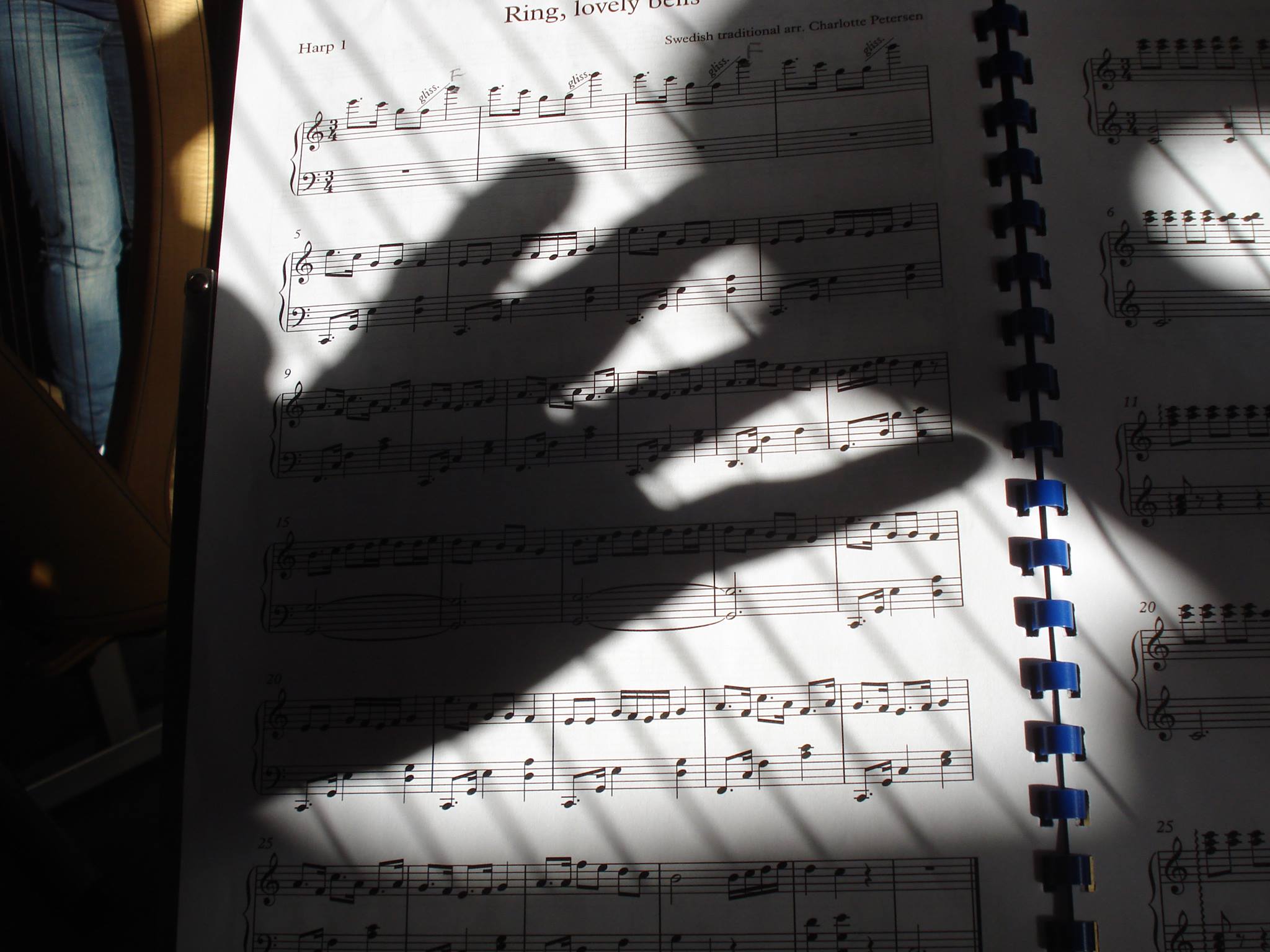
As you can see, the Welsh triple harp is a bit taller than my lever harp. Many of Robin’s tunes are inspired by the Welsh gypsy tradition and his work with Romani Eldra Roberts, who has passed on the melodies to him. Charlotte gave us some haunting tunes from Scotland, Ireland and France, as well as a delightfully jingly Swedish Christmas carol complete with glissandi and bell-like chimes. A reindeer duly appeared on the front lawn.
At the Harps North West Christmas party concert participants aged seven to seventy played a selection of group carols. There were also contributions from soloists and our smaller playing groups. One brave young participant played a solo after only six lessons. Alfie had brought his cardboard harp, but seemed to prefer to sweep the floor. Perhaps we’ll hear him play next year!

A very happy Christmas to you all from the world of harping!

For anyone who wants to try out the harp, there are regular beginners’ workshops with Harps North West and through regional branches of the Clarsach Society. Mary Dunsford also offers sessions on the cardboard harps through Cumbria Cardboard Harp Project https://www.facebook.com/CardboardHarpProject. Go on – it’s impossible to make a bad sound!
09 Sunday Nov 2014
Posted in Blogging on
It is peculiarly satisfying that the word ‘remember’ rhymes with November. The clocks go back, we close the curtains earlier, and suddenly a number of opportunities appear which encourage us to draw in on ourselves and reflect.

Our local firework display gets bigger and louder every year, prompting family discussions about the few simple and probably damp squibs carried out to our childhood gardens in a brown paper bag. Fifty years ago we were happy with sparklers and Roman candles. The token Catherine wheel didn’t usually work. A couple of rockets in milk bottles – now, stand well back! – were reserved for the grand finale. I don’t think they banged and popped at all, but we oohed and aahed at the string of three or four stars in the sky and were very satisfied.
Guy Fawkes was one of the things I used to have to explain to my foreign students.
‘So you celebrated someone blowing up your parliament?’
‘Well, I think we celebrate that he got caught …’
Some of the foreign students I refer to came from former East Germany; they worked with me as foreign language teaching assistants. And as I write this on Remembrance Sunday, I am thinking about another anniversary and another occasion for fireworks; it is 25 years since the fall of the Berlin Wall. When I first stood at the Brandenburg Gate in 1972 and could not cross, I never imagined the Wall would ever come down. But it did, and nine young people came to work for me, expanding their own horizons while giving us so many insights into the Germany that once was and the Germany that was developing. In 2006 I walked through the Brandenburg Gate with a school party, all clamouring for Starbucks. It was hard to explain to them how it was for me in 1972.
This year, remembrance is focused particularly on the World War 1 Centenary, and I look forward to an evening of music and poetry which my choir is staging to commemorate this. But I also reflect on my father’s experiences in World War 2 and his words as described in ‘The First of Foot’, the history of the Royal Scots. He spoke on Armistice Day at Dryburgh Abbey, 1946.
‘Quiet air, brown leaves on an ageing sward, the silver Tweed and red poppies on a great soldier’s grave.’

That is November.
16 Thursday Oct 2014
Posted in Writing News
Summer’s over and I’m back at the computer most mornings getting into writing gear again. With my Open University Creative Writing modules behind me, it’s been more challenging as I have to set my own goals and targets and decide my future directions.
My last project in July was to work with Gabriele Haefs and Karin Braun of Edition Narrenflug on a translation into German of my Mslexia prizewinning story Shifting Sands. I’m pleased to say the bulk of the work has been done. It was enjoyable to debate the translation of some tricky words (blackhouse, machair and shinty took the prizes) and see how the story began to take shape in its German version. ‘Treibsand’ will appear in an anthology ‘Weibsbilder’ compiled by Gabriele and published by Karin at Edition Narrenflug in April 2015. http://edition-narrenflug.com/
After that there was a bit of a lull. And then Write-Track came along, a new website for writers with the motto ‘finish what you start’. The idea is that setting goals and tracking how often you write will help you achieve your aims. The website also promotes a sense of community, as writers share their thoughts and their progress. So far it seems to have worked for me, pushing me from ‘I might write today’ into ‘I will write today’. It’s created quite an energy, and I got round to submitting some poems to competitions and anthologies. It also made me review my radio play ‘Ships That Pass’, which was my final assignment for my Open University course. Based on some family diary fragments, it is about a young widow in Edwardian Glasgow and the lure of a trip to America. To qualify for submission to the BBC Writers’ Room I had to extend it from 30 minutes to 45. It was quite difficult to go back and change something that I had regarded as finished, but the ‘extensions’ grew organically over time and I reached the required length. I quite like its new look. My dream is to develop this story into a novel, but it will take a bit more thought! In the meantime I’m continuing with some more short fiction and poetry projects. Thank you to Bec at Write-Track for setting up the website at https://www.write-track.co.uk!
15 Monday Sep 2014
Posted in Blogging on
At the very end of August, when most of the country’s inhabitants seemed to be throwing buckets of icy water over their heads, we chose instead to go somewhere at 2 mph, turn around and come back. It seemed a better option.
A week on a narrowboat has long been on our list of experiences to try and, after a couple of years when middle-aged twinges have forced us to rethink our usual walking holidays, 2014 became the Year of the Boat. It couldn’t be a basic boat, that was for sure. Neither of has ever camped, so we were delighted to hit on Beacon Park Boats of Abergavenny, who promised fluffy towels, granite worktops in the galley and a reassuringly normal looking bathroom. They operate, moreover, on the Monmouthshire and Brecon Canal, which winds through the lush, green Usk Valley in South Wales with views of the Brecon Beacons; with only a few locks to negotiate it is described as ‘perfect for beginners’. Boxes ticked!
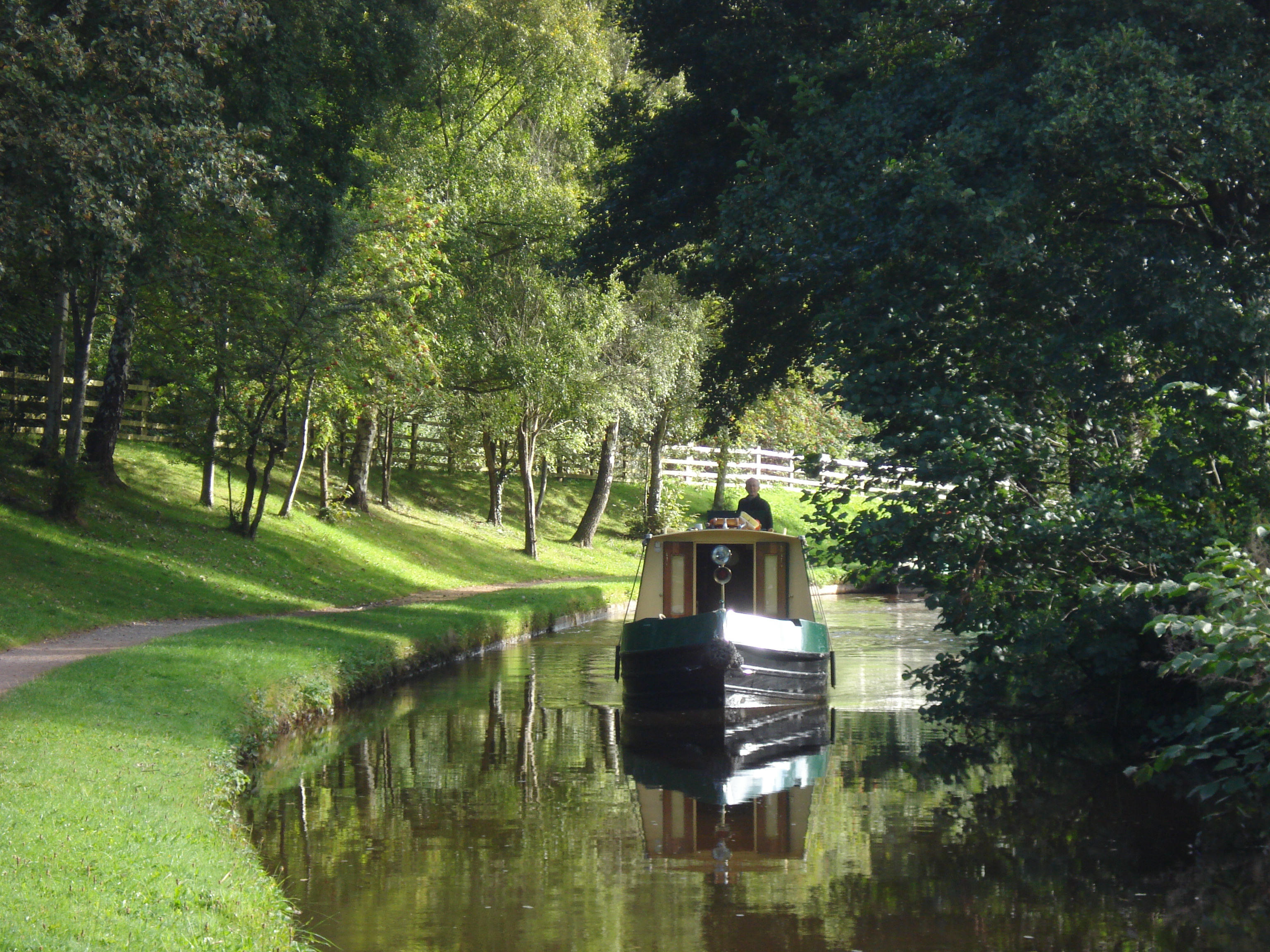
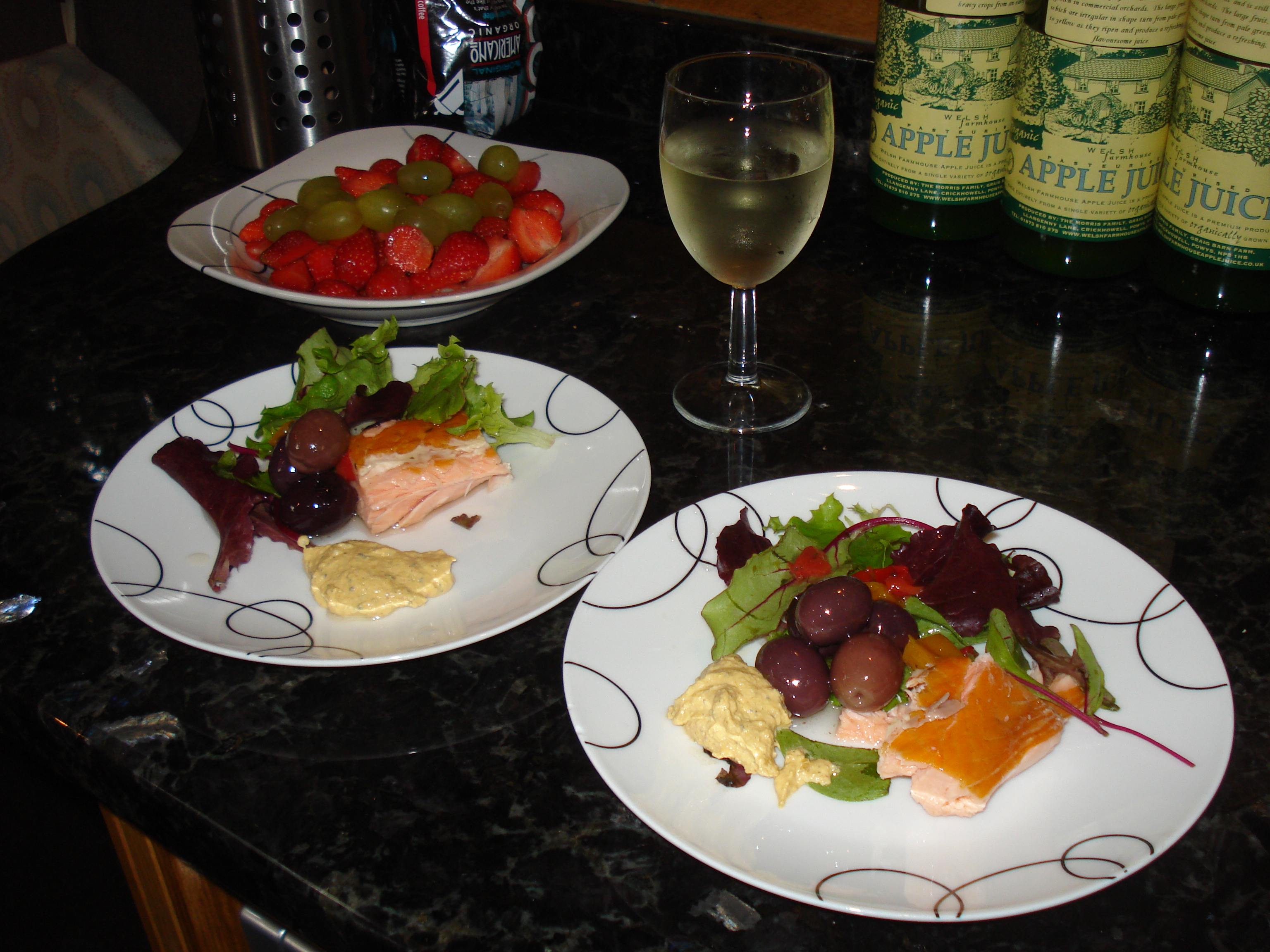
Beacon Park Boats kindly provide an instructional DVD once the deposit is paid. This is really useful, and it’s also the moment when you sit up and realise there’s more to narrowboating than standing looking decorative at the tiller. You might die, for example. You should check regularly for gas smells as well as beeps from the carbon-monoxide monitor, and you must remember to keep the boat well ventilated. You need to open the weedhatch daily to check the propellor for weeds and other debris which might interfere with the mechanism, remembering to switch off the engine first of course. You have to keep the water tank topped up so the boat lies low enough in the water to enable you to creep under very low bridges. And your prize for getting to Brecon is the joy of ‘pumping out’. Mooring rings and pins also come into it. And knots: I discovered I was finally going to use the round turn and two half hitches I’d learned in the Brownies and felt smug.
Sobered by all this responsibility, we booked a training day en route to Wales with the wonderful Linda Andrews of Cheshire Cat Training near Audlem. She began by telling us a few more ways we could die and pointing out the high number of ‘domestics’ involving couples on narrowboats (‘Did you hear that pair trying to get out of the marina this morning?’). The message of the day was that you have to work as a team and that each of you should learn to do every task. We were duly shown the ropes – the round turn and two half hitches (knew that one), the canalman’s hitch, and the 0800 knot.

By lunch time we’d wiggled our way down the Shropshire Union canal towards Nantwich, oversteering most of the way. We’d also turned the boat in a ‘winding hole’ and negotiated a few bridges. The lock tuition came after lunch, when we were suffering from both food and information overload, so I don’t think that we excelled here. Overall, though, we left feeling a lot more confident and knowing that more practice would edge us in the direction of perfection. Thank you, Linda!
And so our green week in Wales began. Everything was green – the canopy of trees above us, the pastures of the Usk Valley, the boat’s livery and our lifestyle. We slowed down, awoke to birdsong, got up with the light and went to bed with the coming of darkness. There was a certain satisfaction in combining physical work (the locks!) and mental work (route planning and water stops). We became more careful about conserving water and reducing waste.


The world looks different at towpath level – ducks look you in the eye and dogs’ legs trot past your window. Squirrels do acrobatics above your head. People stop to chat. We walked and explored towns, villages and pubs along the way, and friends came to visit us. We felt proud to have negotiated locks and a tunnel. And because we travelled so slowly the week seemed very, very long. We never made it to Brecon but that didn’t matter; there was so much to see along the way, and we didn’t have to pump out.
Domestics? Not a single one. We worked as a team.
24 Sunday Aug 2014
Posted in Blogging on
Back to School: the dreaded words that accompany shortening days and an autumnal chill in the morning air. In my past life as a teacher I chose not to look at the ‘Back to School’ signs that always appeared far too soon in the shops. All teachers will tell you that, unless you divert yourself by escaping on holiday, the month of August can seem like one long Sunday night before the biggest Monday morning of them all, the September start of term. It is a truth universally acknowledged that the challenge of this hurdle doesn’t get any easier, no matter how many years you teach. But we carry on because, once we’ve got used to the externally imposed timetable and the routine, we always find pride and joy in our work again. There is a particularly special moment to seize here of sharpened pencils, glowing highlighter pens, crisp new exercise books waiting to be filled, syllabuses to be discovered, qualifications to be gained. Brains are not yet tired, and there is an eagerness to learn new things. And there is always a holiday to be longed for and savoured when it comes.
Now that I’m retired, summer holidays are not quite what they used to be. I have no OU course on the go, no choir on Tuesdays, no Pilates on Wednesdays. We also don’t go on holiday in July and August, because that’s when everyone else does. So by mid-August my views on ‘Back to School’ are a little different from what they once were. It’s not quite the ‘Mum, I’m bored’ mentality of my teens, but it’s a wish for routine and structure imposed from outside; I don’t seem to be very good at imposing my own. Must Do Better.
However, one of the pleasures of this summer has been meeting up with old friends from various educational institutions. On the train to Glasgow last week to meet three school friends I realised it was fifty years since we’d started secondary school at Montrose Academy. I remembered the excitement of that and wondering if I’d cope with new subjects like Science, French, Latin, Algebra and Geometry. And I also remember wondering who my new friends would be.
Three of these friends were waiting in the café at The Lighthouse. After coffee, chat and laughter we all eagerly followed up the suggestion of going to Scotland Street School Museum – what better place to spend an hour before lunch? Housed in an imposing red sandstone building designed by Charles Rennie Mackintosh, it took us all back to 1908 – older than our vintage, of course, but there was still much of our own school experience there. We touched the cold, white tiled walls, sniffed the carbolic soap in the cloakrooms, did the hopscotch marked out on the corridor floor and read the rhyme on the wall in the ‘How we Played’ exhibition:
One, two, three aleerie
Four, five, six aleerie
Seven, eight, nine aleerie
Ten aleerie overball.
Oh yes! The ‘aleerie’ involved lifting your leg in a particular way and bouncing a ball under it. I remember my mother teaching me it. She had learned it in an Edinburgh playground in the 1920s. We used to say ‘Ten aleerie postman’, but I suppose there are regional differences.
Continuing with the exhibition, we tut-tutted appropriately at the gender specific toys (a ‘set of tools just like Dad’s’ and a ‘twin tub just like Mum’s’) and cooed over skipping ropes. So much to enjoy, and not a computer in sight.

The largest classroom was devoted to Domestic Science, clearly more important for girls then than French, Latin, Algebra and Geometry. It has a huge polished range, capacious Belfast sinks and a mangle for washdays. There are three large benches with rolling pins and baking boards at the ready. We lingered over the blackboard with the recipe but were not tempted by the fish soup or the savoury meat pie.
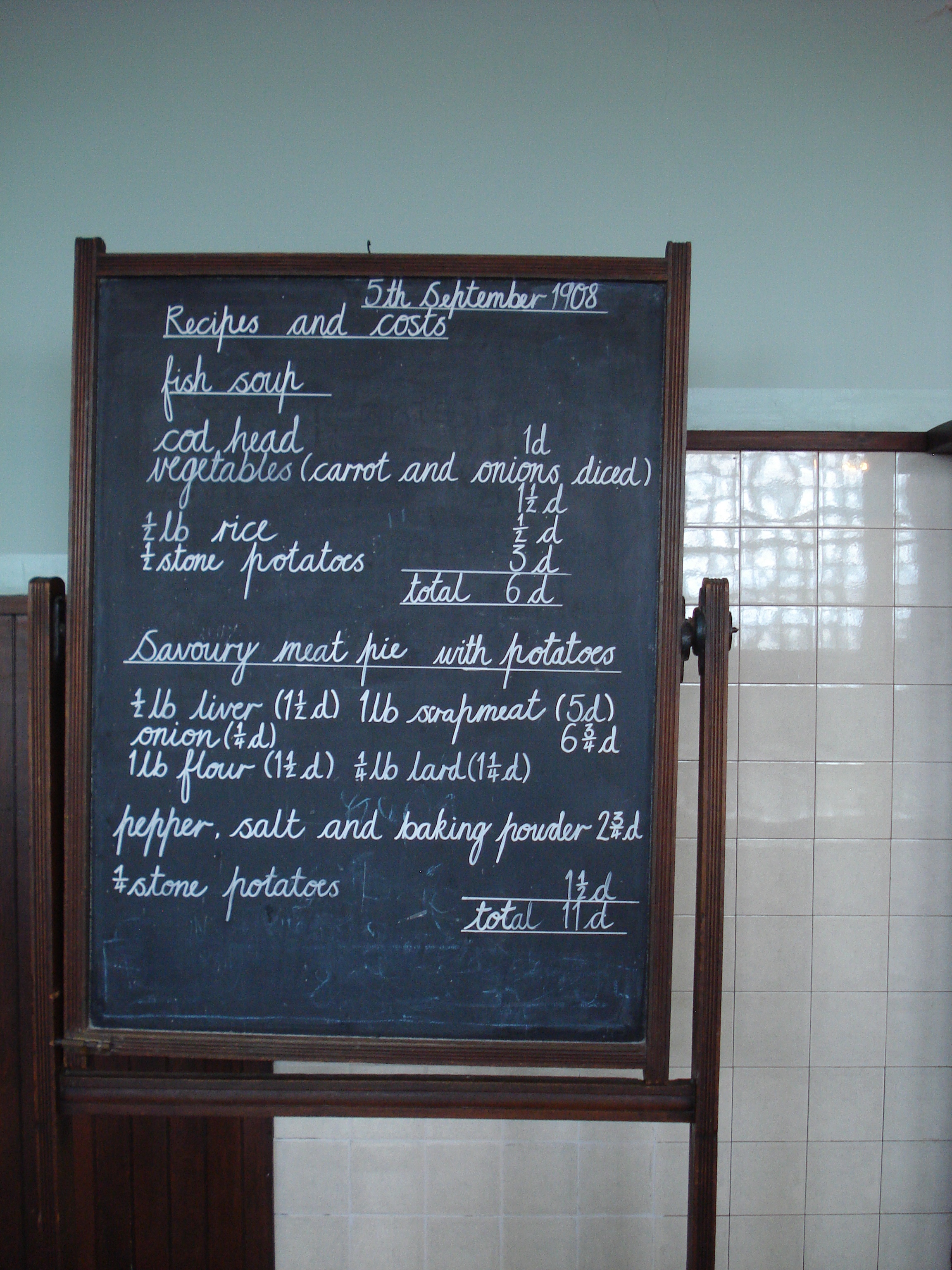

In the classroom across the corridor we touched the wooden desks and the uniform on display. There was an arithmetic problem on the board:
John walks into a stable and finds 2 horses, 3 cats, 1 dog and a beetle. How many legs are there in the stable?
It’s one to keep and solve later. We’re too busy with a photo shoot. How many legs are there in the classroom?
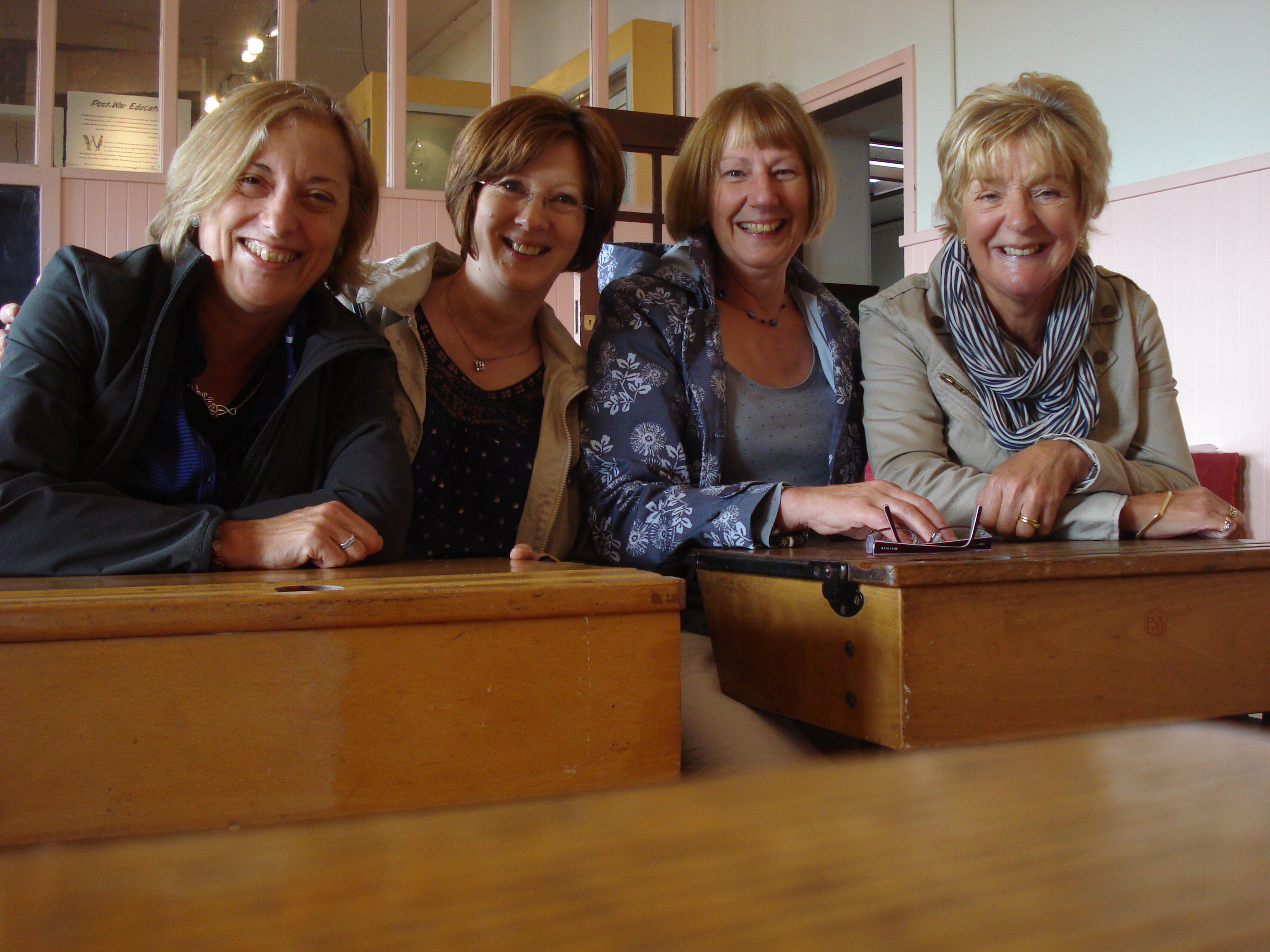
Back to School – we love it!
And for all those going back this September – enjoy it!
You can find out more about Scotland Street Museum at http://www.glasgowlife.org.uk/museums/scotland-street/Pages/default.aspx
08 Friday Aug 2014
Posted in Blogging on
The good thing about setting off on a walk is that sometimes there are surprises in store. When I was a child we did a lot of ‘exploring’, and I see going for walks as the grown up version of that.
Yesterday was a perfect day for getting out, so we headed up The Helm at Oxenholme which, for very little effort, gives views of Lakeland, the Howgills, Morecambe Bay and the hills of Lancashire and Yorkshire. Our walk continued over fields in the direction of the village of Old Hutton and, judging by the nettle-covered stiles, was very little frequented. The nettles took me back again to childhood explorations and frantic searches for dock leaves as the magic antidote to nettle stings. We did not survive the many stile crossings unscathed.
The surprise came at Old Hutton, when an elderly gentleman working in his garden invited us in for tea and cake. ‘I don’t see many on that path these days,’ he remarked. We admitted to a tiny bit of hesitation, particularly when he shouted to his wife that he’d ‘found two’, but we made bold to enter. And then, as a reward for our finding of the hidden way, his wife brought out tea and home-made cakes. Over the next half hour we chatted and found many things in common.

Things like this don’t often happen, do they? We left so enriched by the experience that I didn’t notice my nettle stings on the way back to the car. Thank you to our hosts for their trust.
06 Wednesday Aug 2014
Posted in Writing News
Thanks to Ink Pantry Publishing for their ‘Sunday Spotlight’ interview on 4th August 2014. My thoughts on writing and a few other things!
31 Thursday Jul 2014
Posted in Writing News
One of the aspects of writing I studied on the Open University’s A363 Advanced Creative Writing course is cutting between strands featuring different characters. Readers love this, apparently, as they can speculate about how the characters will converge. The secret for the writer is to pull it off without confusing the reader. I think Kate Atkinson does it particularly well in her series of Jackson Brodie detective novels ‘Case Histories’, ‘One Good Turn’ etc. It’s usually more appropriate for a novel than a short story, but our OU tutor Nicky Harlow invited us to experiment on our online forum. After Nicky kickstarted the project, Sue Manning and I added bits on, my instalments coming in from the ski slopes of Sölden, where I was on holiday. This rather influenced my characters’ activities!
Somehow Sue managed to draw the various threads together in the conclusion and suggested submitting to Ink Pantry Publishing, which showcases Open University students’ work. So the next challenge involved trimming our 2200 words to fit Ink Pantry’s submission rules. Three strands in 1500 words seemed a big ask, but we honed our editing skills. ‘The Mice will Play’ is the result, now available to read on the Ink Pantry Publishing website:
http://inkpantry.com/blog/words-for-wednesday-the-mice-will-play-fiction/
Ink Pantry Publishing invites submissions from all students of Creative Writing. Further details are available on their website.
25 Friday Jul 2014
Posted in Blogging on
Temperatures are soaring and weather presenters are getting over-excited about the orange weather map again, although it has now got to the point when they do concede that ‘some of you may find this a little uncomfortable’. I belong in this category, but I do savour early mornings in the garden and evening walks by the river, surely the best times of day to be out and about in the heat of summer.
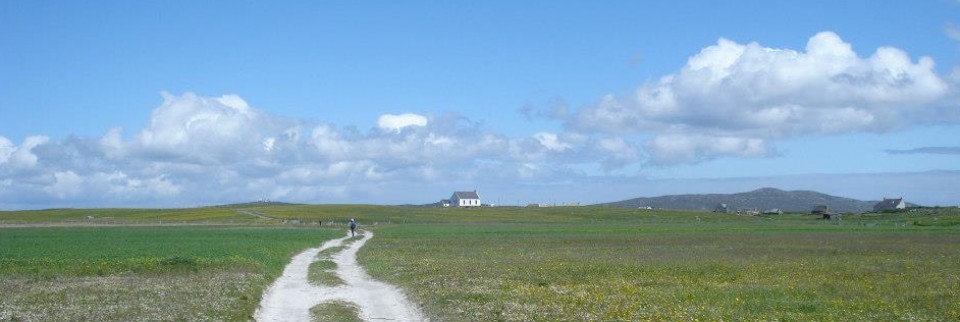
I prefer a bracing climate. That’s why we head for the Hebrides every June.

I’m never happier than when boarding a CalMac Ferry – the friendly personnel who guide you into the tightest corners of the car deck, the swirly patterned carpets, the coffee bar with the tray bakes, the slightly rusting steps up to the observation decks, the plastic seats faded by sun and salt spray, the wind in my hair, the mixed smells of sea, engine oil and fish and chips. We sail out of Oban to the music of car alarms going off on the deck below us, nose out past the island of Kerrera and head up the Sound of Mull, pointing out Duart Castle and looking for Ben More (it’s nearly always in cloud) and the coloured houses of Tobermory. That’s where the sheltered waters end, near Ardnamurchan Point. This time we’re lucky, and it’s calm as we head west. The silhouettes of mountains on the horizon gradually become more defined, and five hours after leaving Oban we sail into Castlebay, Barra – the main community on the island, with a castle, in a bay.
People usually know more about France and Spain than the Western Isles. Sometimes they’re not sure where we’re heading.
‘Did you say Paris?’
‘No, Harris.’
and
‘Barra? Where’s Barra?’
And so out comes the atlas and we point to this year’s destination at the southern end of the archipelago that forms the Outer Hebrides. From the Butt of Lewis lighthouse in the north to here it’s 130 miles. There are a few islands further south, starting with Vatersay, which is linked to Barra by a causeway. The roads end here. Then there are a few more islands, all ending in ‘ay’ – Sandray, Pabbay, Mingulay and Berneray. The ‘ay’ means island.
Barra is the perfect island with all the elements of the Western Isles in just 35 square miles – white sandy beaches, turquoise seas, moorland, birdsong, wild flowers, mountains and lots of weather.

You don’t have to drive far to enjoy all these things, and even a small hill yields amazing views. You can go plane-spotting too; it’s the only airport in the world where scheduled flights land on the beach, and this is worth seeing. Baggage handling is a tractor with a trailer, which delivers the cases neatly to a bus shelter at the side of the car park.

We like to take a self-catering cottage on these holidays – plenty space for all the walking gear, particularly if it gets wet, and the opportunity to browse the local Co-op to be tempted by haggises, black puddings and Meal Deals. Usually your cottage owner will tell you what day the fish van comes. In Castlebay, it’s Thursday. We wonder every year why fresh fish is actually such a rarity when we’re surrounded by the ocean.


At the end of June, there are flowers in profusion on the machair – more varieties of orchid than we can count and the scent of clover in the air. The nights hardly get dark and you can sit on the western beaches and watch the sun dip down beneath the horizon shedding golden shafts across the water.

If you want to go south to the last islands in the chain, Donald Macleod of http://www.barrafishingcharters.com/ will take you to the deserted island of Mingulay in his boat the Boy James. Expect to share the boat with anglers who will be dropped off at other islands on the way, and expect some movement on the waves. If the tides and conditions are right, Donald will take you round the western cliffs of Mingulay and through a natural sea arch. It’s all in a day’s work to him. ‘There’s a couple of guillemots,’ he says in an understated way as our excited companions point there cameras at thousands of birds wheeling under the beetling cliffs. ‘Oh, and a couple of seals.’
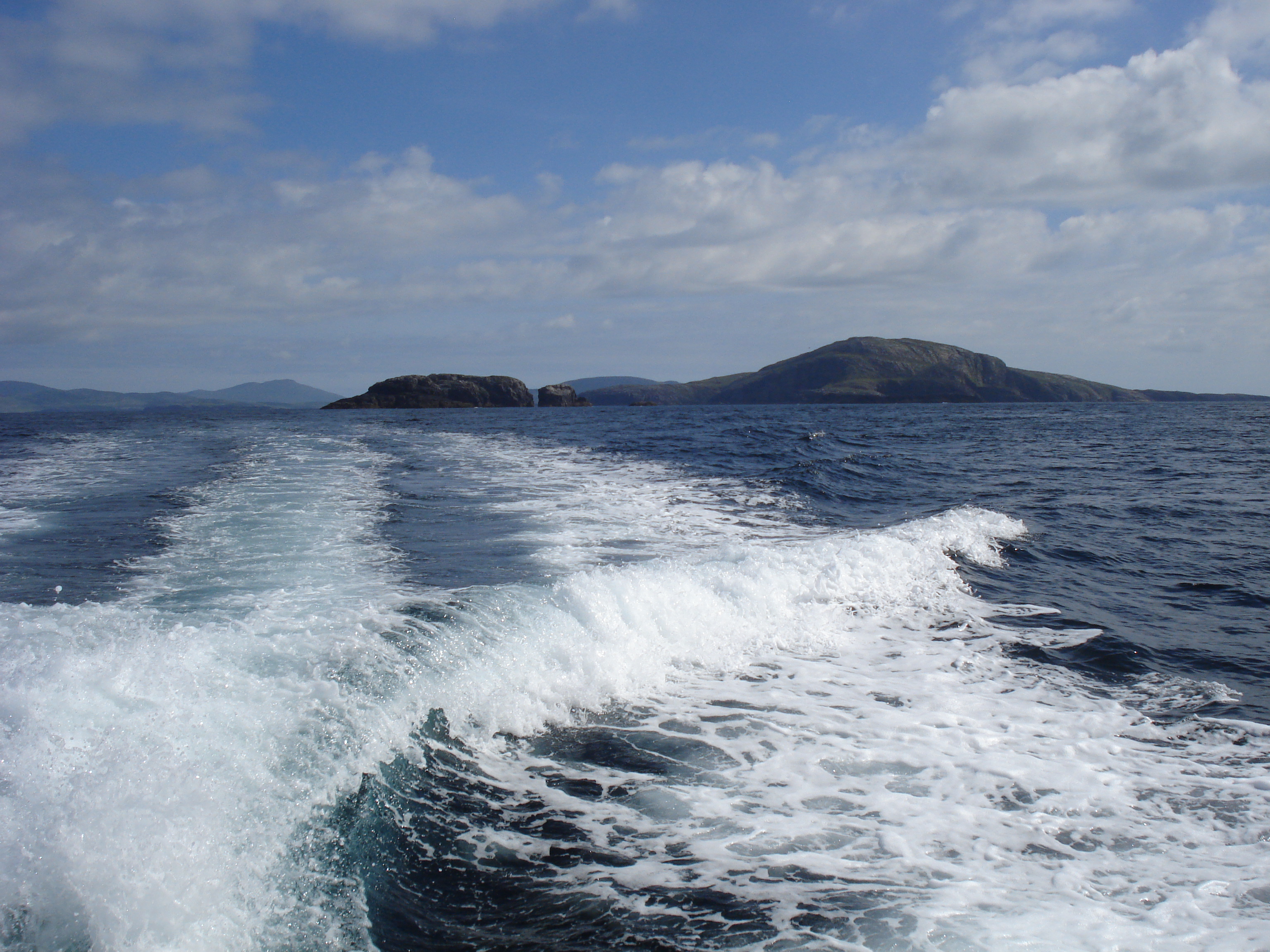


You land on the east side of Mingulay, a perfect desert island beach. Donald takes us on a rubber dinghy to the landing place, where we have to scramble up steep rocks to a grassy slope. ‘You might be seeing puffins up there,’ he nods. The puffin burrows have little flags outside with numbers (presumably they’re being monitored). We sit for a while and are rewarded by the residents of Number 17 coming in with some fish. No once a week delivery for them.

We walk past the ruins of the village and up a pathless slope to the top of the cliffs, hard work in the hot sun. Here we eat lunch, keeping a respectful distance from the dive-bombing skuas. It feels remote; we have breathing space.
Donald serves tea and scones on the way back. He also has a folder of information on Mingulay if you can cope with reading this in a bouncing boat while holding a cup of tea. I prefer just to stare at the horizon and take it all in.
There’s one other question we get asked about the Western Isles. What about the midges? This year, there were none. Either the place is charmed or we were just lucky.

 Harping On