Thanks to Ink Pantry Publishing for their ‘Sunday Spotlight’ interview on 4th August 2014. My thoughts on writing and a few other things!
Ink Pantry Publishing interview
06 Wednesday Aug 2014
Posted in Writing News
06 Wednesday Aug 2014
Posted in Writing News
Thanks to Ink Pantry Publishing for their ‘Sunday Spotlight’ interview on 4th August 2014. My thoughts on writing and a few other things!
31 Thursday Jul 2014
Posted in Writing News
One of the aspects of writing I studied on the Open University’s A363 Advanced Creative Writing course is cutting between strands featuring different characters. Readers love this, apparently, as they can speculate about how the characters will converge. The secret for the writer is to pull it off without confusing the reader. I think Kate Atkinson does it particularly well in her series of Jackson Brodie detective novels ‘Case Histories’, ‘One Good Turn’ etc. It’s usually more appropriate for a novel than a short story, but our OU tutor Nicky Harlow invited us to experiment on our online forum. After Nicky kickstarted the project, Sue Manning and I added bits on, my instalments coming in from the ski slopes of Sölden, where I was on holiday. This rather influenced my characters’ activities!
Somehow Sue managed to draw the various threads together in the conclusion and suggested submitting to Ink Pantry Publishing, which showcases Open University students’ work. So the next challenge involved trimming our 2200 words to fit Ink Pantry’s submission rules. Three strands in 1500 words seemed a big ask, but we honed our editing skills. ‘The Mice will Play’ is the result, now available to read on the Ink Pantry Publishing website:
http://inkpantry.com/blog/words-for-wednesday-the-mice-will-play-fiction/
Ink Pantry Publishing invites submissions from all students of Creative Writing. Further details are available on their website.
25 Friday Jul 2014
Posted in Blogging on
Temperatures are soaring and weather presenters are getting over-excited about the orange weather map again, although it has now got to the point when they do concede that ‘some of you may find this a little uncomfortable’. I belong in this category, but I do savour early mornings in the garden and evening walks by the river, surely the best times of day to be out and about in the heat of summer.
I prefer a bracing climate. That’s why we head for the Hebrides every June.

I’m never happier than when boarding a CalMac Ferry – the friendly personnel who guide you into the tightest corners of the car deck, the swirly patterned carpets, the coffee bar with the tray bakes, the slightly rusting steps up to the observation decks, the plastic seats faded by sun and salt spray, the wind in my hair, the mixed smells of sea, engine oil and fish and chips. We sail out of Oban to the music of car alarms going off on the deck below us, nose out past the island of Kerrera and head up the Sound of Mull, pointing out Duart Castle and looking for Ben More (it’s nearly always in cloud) and the coloured houses of Tobermory. That’s where the sheltered waters end, near Ardnamurchan Point. This time we’re lucky, and it’s calm as we head west. The silhouettes of mountains on the horizon gradually become more defined, and five hours after leaving Oban we sail into Castlebay, Barra – the main community on the island, with a castle, in a bay.
People usually know more about France and Spain than the Western Isles. Sometimes they’re not sure where we’re heading.
‘Did you say Paris?’
‘No, Harris.’
and
‘Barra? Where’s Barra?’
And so out comes the atlas and we point to this year’s destination at the southern end of the archipelago that forms the Outer Hebrides. From the Butt of Lewis lighthouse in the north to here it’s 130 miles. There are a few islands further south, starting with Vatersay, which is linked to Barra by a causeway. The roads end here. Then there are a few more islands, all ending in ‘ay’ – Sandray, Pabbay, Mingulay and Berneray. The ‘ay’ means island.
Barra is the perfect island with all the elements of the Western Isles in just 35 square miles – white sandy beaches, turquoise seas, moorland, birdsong, wild flowers, mountains and lots of weather.

You don’t have to drive far to enjoy all these things, and even a small hill yields amazing views. You can go plane-spotting too; it’s the only airport in the world where scheduled flights land on the beach, and this is worth seeing. Baggage handling is a tractor with a trailer, which delivers the cases neatly to a bus shelter at the side of the car park.

We like to take a self-catering cottage on these holidays – plenty space for all the walking gear, particularly if it gets wet, and the opportunity to browse the local Co-op to be tempted by haggises, black puddings and Meal Deals. Usually your cottage owner will tell you what day the fish van comes. In Castlebay, it’s Thursday. We wonder every year why fresh fish is actually such a rarity when we’re surrounded by the ocean.


At the end of June, there are flowers in profusion on the machair – more varieties of orchid than we can count and the scent of clover in the air. The nights hardly get dark and you can sit on the western beaches and watch the sun dip down beneath the horizon shedding golden shafts across the water.

If you want to go south to the last islands in the chain, Donald Macleod of http://www.barrafishingcharters.com/ will take you to the deserted island of Mingulay in his boat the Boy James. Expect to share the boat with anglers who will be dropped off at other islands on the way, and expect some movement on the waves. If the tides and conditions are right, Donald will take you round the western cliffs of Mingulay and through a natural sea arch. It’s all in a day’s work to him. ‘There’s a couple of guillemots,’ he says in an understated way as our excited companions point there cameras at thousands of birds wheeling under the beetling cliffs. ‘Oh, and a couple of seals.’
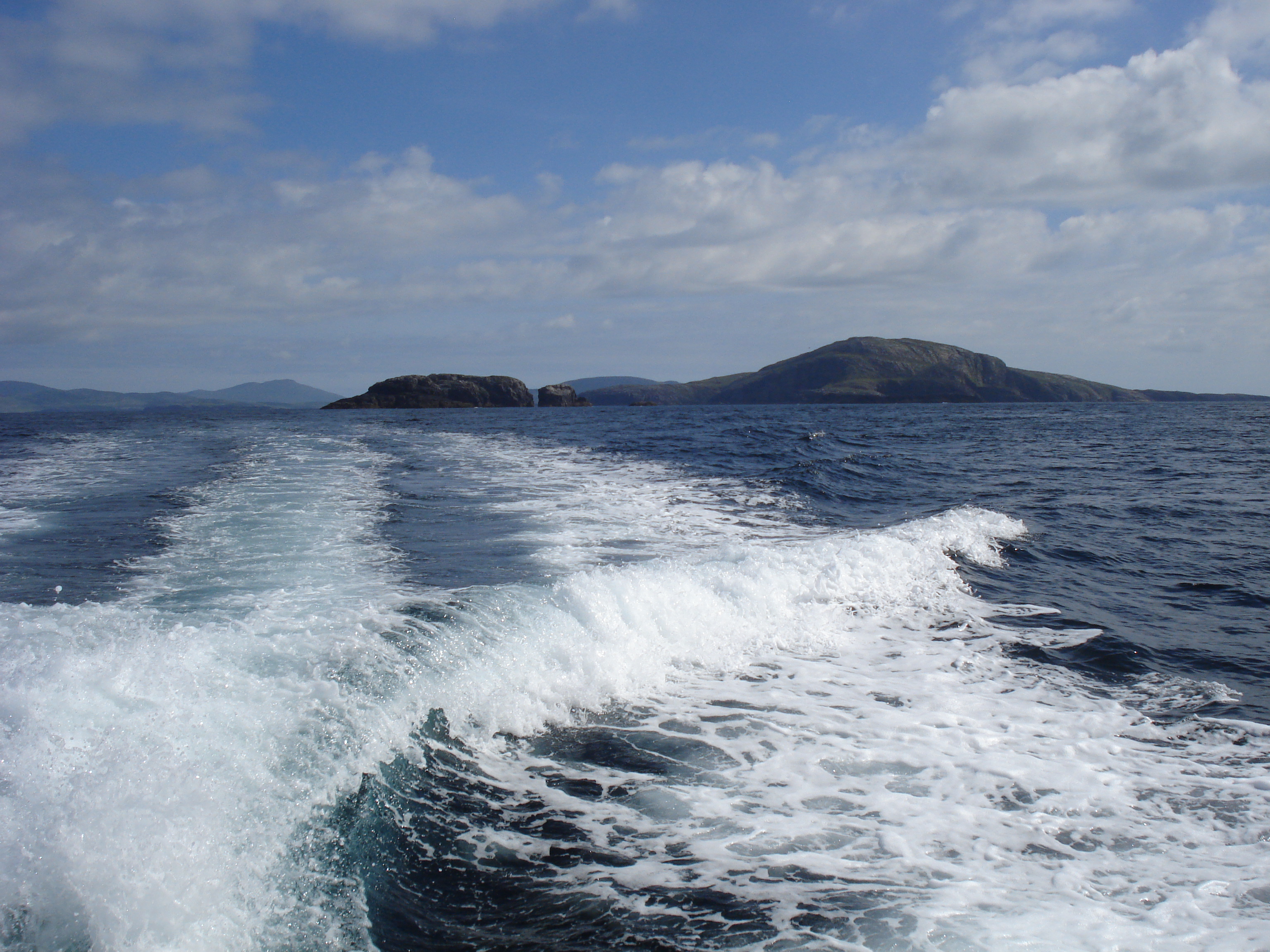


You land on the east side of Mingulay, a perfect desert island beach. Donald takes us on a rubber dinghy to the landing place, where we have to scramble up steep rocks to a grassy slope. ‘You might be seeing puffins up there,’ he nods. The puffin burrows have little flags outside with numbers (presumably they’re being monitored). We sit for a while and are rewarded by the residents of Number 17 coming in with some fish. No once a week delivery for them.

We walk past the ruins of the village and up a pathless slope to the top of the cliffs, hard work in the hot sun. Here we eat lunch, keeping a respectful distance from the dive-bombing skuas. It feels remote; we have breathing space.
Donald serves tea and scones on the way back. He also has a folder of information on Mingulay if you can cope with reading this in a bouncing boat while holding a cup of tea. I prefer just to stare at the horizon and take it all in.
There’s one other question we get asked about the Western Isles. What about the midges? This year, there were none. Either the place is charmed or we were just lucky.

11 Wednesday Jun 2014
Posted in Writing News
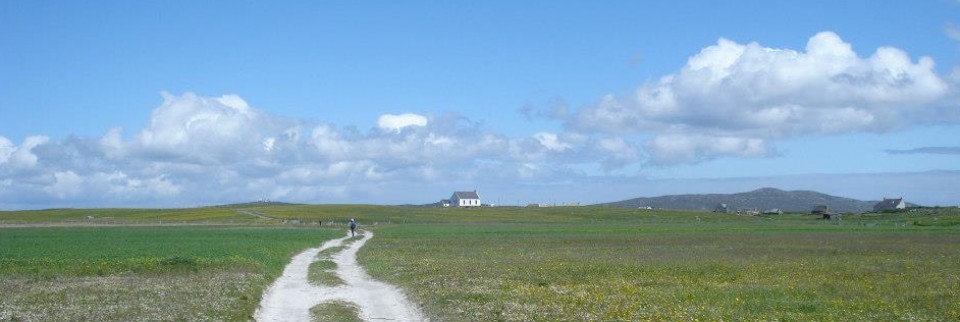
I’m delighted to announce that I’ve won third prize in the 2014 Mslexia Women’s Short Story competition, judged by Jane Rogers. My winning story ‘Shifting Sands’ is set in South Uist against the backdrop of the header picture on my blog; perhaps I knew it would lead somewhere when I picked this photograph! The story is in the ‘New Writing’ section of the June/July/August edition of Mslexia magazine.
You can read the story online at: https://www.mslexia.co.uk/whatson/msbusiness/scomp_active.php
How I did it
How do you write a good short story? One thing is certain; it can’t be done in one evening. Jane Rogers, who judged the competition, remarked in Mslexia that ‘it can take a very long time, sometimes years, to get a literary short story right.’ There were many drafts of ‘Shifting Sands’; it took about two months to polish in its final stages, but some of the ideas had been in my head for much longer.
I like a strong, vivid setting for my stories, and I have found that I am naturally drawn to the islands of the Outer Hebrides, which I visit regularly on holiday. There is an other-worldliness about the open spaces, the empty beaches, the unpredictable weather, the colours and the quality of light. There is a strong link between character and place here, as well as a tradition of folk tales and legends. In the summer before I began to write this story, we spent a week in Howmore, South Uist, in a holiday cottage which was the former home of a Gaelic bard Donald John Macdonald, whose father Duncan MacDonald was a well-known ‘seanchaidh’ (storyteller). Perhaps some of the magic rubbed off!
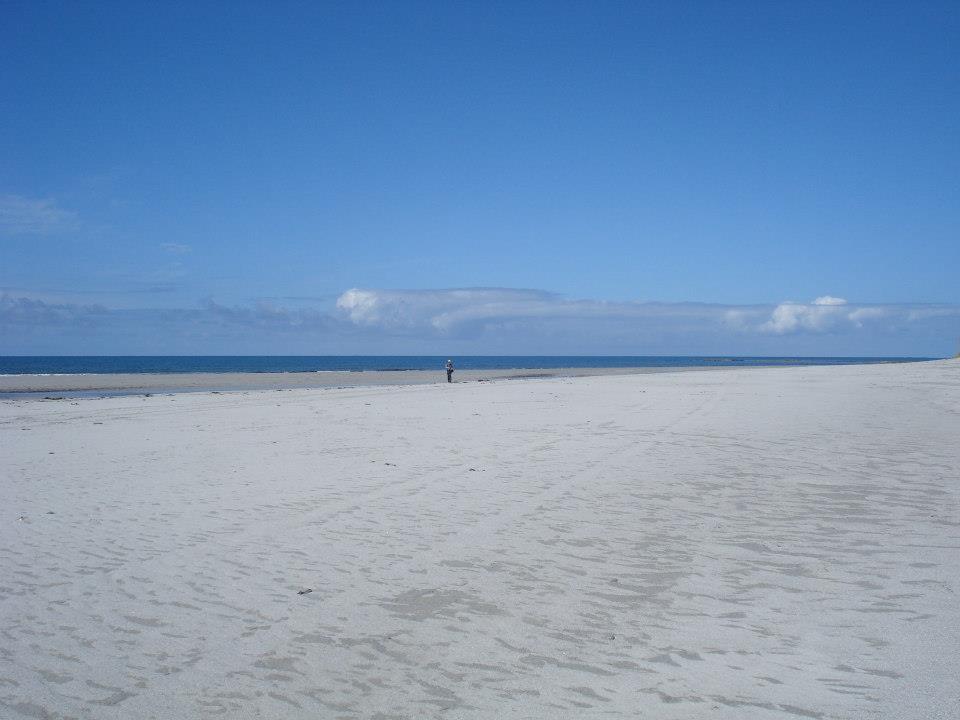
The original opening of ‘Shifting Sands’ was written on my Open University course in response to a simple prompt about a body lying across the doorstep of a church and the sound of a baby’s cry. Students of A363 will recognise it. I had to continue the story using the title ‘Woman in the Wind’. Straight away I found myself back in the South Uist. I could visualise the church of Howmore and the flowers on the machair, and I could hear the sea. When Donald led me into the blackhouse I could describe it with no difficulty. I had no idea at that stage where the story would go, or who the girl was. Later on in the Open University course, we were asked to write a piece involving the tension of a narrow escape from an accident. I had read about the horse and trap crossing the South Ford from Benbecula to South Uist in Christina Hall’s ‘Tales from an Island’; I decided to write about an accident here and build this into my story. The characters Catriona and Angus had appeared in the rough notes of a ‘free-write’ three years previously. I am not sure myself who Eilidh is, but I may have been influenced by folk tales of silkies.
I wanted the story to have a lyrical quality and drafted it initially as a narrative poem with verses told alternately from the points of view of Donald, Catriona and Morag. This helped me create six sections and achieve a sense of shape and proportion. My shifting narrators became like the shifting sands and shifting truth. I also wanted the story to have a timeless feel. It is clearly not modern, but the age is not specified. As regards the language, I knew my characters would be Gaelic speakers, and I had to convey that somehow through a lilting tone in the English and some attention to the vocabulary and word order. The original story was 2,600 words long and had to be trimmed to 2,200 for submission to the competition; I had to be really strict about cutting to the essentials!
12 Monday May 2014
Posted in Blogging on
Have you heard of the Mass Observation Archive? I hadn’t until someone alerted me to the fact that I could record May 12th for posterity.
http://www.massobs.org.uk/12may.html
‘This year the Mass Observation Archive will be repeating its annual call for day diaries, capturing the everyday lives of people across the UK.
The diaries will be stored in the Archive at The Keep and be used by a wide range of people for research, teaching and learning including academics and students, schools, writers, producers, artists, community and special interest groups and the general public.
In 1937 Mass Observation called for people from all parts of the UK to record everything they did from when they woke up in the morning to when they went to sleep at night on 12th May. This was the day of George VI’s Coronation. The resulting diaries provide a wonderful glimpse into the everyday lives of people across Britain, and have become an invaluable resource for those researching countless aspects of the era.
May 12th 2014 is likely to be quite an ordinary day, but for those researching, the ‘ordinary’ can often provide extraordinary results. The diaries will be held and used alongside the 1937 documents. We would be very grateful if you could document your May 12th 2014 for the future.’
I decided to take up the challenge! Here is a shortened version of my May 12th.
I get up at 6.30, put the Wifi on and go back to bed. I’m going to finish reading ‘Island’ by Jane Rogers on the Kindle app on my tablet. But first I want to check my emails, the Open University website and my Facebook account. Since I retired four years ago it’s become a morning ritual, and I acknowledge it may replace going out to work with another kind of connection to the world. I get to know who else is a lark and can wish someone a happy birthday with ease. Now there’s even a pink gift-wrapped box with the person’s name that comes up in my ‘notifications’. Touch or click, all done.
My OH sleeps for another 2 hours and I finish ‘Island’ by eight. It’s a book that’s featured in my Open University Course ‘Advanced Creative Writing’ , which explores the links between drama and other forms of writing. Jane Rogers writes scripts for television and radio as well as novels. ‘Island’ is so well written, with unusual characters and a particularly disturbing narrator. It’s set on an island near Skye, and of course I check Google maps to try to identify it. I think it’s Raasay. She calls it Aaysar, so I might be right.
I get up at 8.15, make Lady Grey tea and switch on Breakfast Television with Bill Turnbull and Louise Minchin. The Queen’s Baton for the Commonwealth Games has arrived in Jersey, which like most events these days is described as ‘incredible’, ‘fantastic’ and ‘amazing’. I hope it gets better weather than the Olympic Torch. One of the things I reflect on when I watch television is the way language changes, not just in the vocabulary used, but in the pronunciation. It’s never long before I hear a few dropped ‘t’s, sadly even from BBC news reporters. Oh yes, everyone’s ge’ing be’er a’ i’.
I have breakfast and log on to my Open University website. We’re coming to the end of A363 ‘Advanced Creative Writing’ now, and at this point we’re providing critique on each other’s work for the final project. Some are doing short stories, some are doing scripts (film or radio). My tutor group has about eight people who contribute regularly, and it’s a fascinating process; we are all different ages and from different backgrounds and this comes out in our writing! This workshopping is a normal part of a creative writing course and has the effect of nudging you into changes you might never have considered. I’m nearly at the end of my project. A family diary written in 1905 has inspired a radio play set in Edwardian Glasgow; it has been transformed into 42 pages of script, 3 pages of commentary and 3 pages of references. Distance learning has definitely enhanced my retirement!
I reward myself for nearly finishing my assignment by booking into a historical fiction writing retreat in November. I have the aim of using the radio play as the basis for a novel, so it’s time to start planning!
At 10.30 I meet three friends (former work-colleagues) for coffee at Country Harvest, Ingleton. It’s a large shop and café complex in Yorkshire barn style. It has just one door; you have to walk past a large array of gifts and food products before you finally reach the café. The table cloths are Cath Kidston, the floor is flagged, the tables are pine and the windows look out on to rain-washed green fields dotted with sheep. We talk about holidays, people we know, ailments, our fear of the NHS as we get older and how we switch off those Panorama programmes about the elderly.
We should be in France this week, but our plan changed in the nanosecond on 4th May when my OH damaged knee cartilage in a tennis match. To make up for the loss we head to Ambleside in the afternoon. Someone has recommended the film ‘Tracks’, which is about a woman, a dog and three camels crossing the Australian Outback. There’s a screening at 3.30, and we’ll follow it with an early meal at Zefirelli’s. There are seven people in the cinema, all our age group. My OH has a stick of course, which makes us feel like real pensioners. We never used to go to films in the afternoon, but there comes a time when you realise you’re quite alert then. The film gives us an enjoyable two hours in the Outback and some food for thought. We talk a bit about the construction of a journey film. Inevitably, there are life-enriching flashbacks for the heroine as we travel. Sometimes the camels cross the screen from left to right, sometimes from right to left. Every so often there’s a crisis, and when there isn’t a crisis you wonder when the next crisis will come. The crises in this film are solved rather quickly. One is very sad, though, and will linger with you if you go to see it.
The meal is vegetarian and we share an antipasti platter and a ‘Rainforest’ pizza. This descriptor doesn’t refer to the topping, but to the fact that a certain percentage is donated to saving the rainforests. The serving staff all come from other EU countries. At first we think our waitress is local, but as she chats we discover otherwise. ‘I’ve forgot me Russian,’ she says in a Cumbrian accent. She’s been here since she was 12 and has only been back to Russia once in 6 years.
The countryside on our trip to Ambleside is looking beautiful; the trees have that fresh green foliage, the hue of the copper beeches is still light, and there are flashes of pink, red and orange from azaleas and rhododendrons. I console myself over the loss of the Provence trip. They don’t have bluebell woods there.

29 Saturday Mar 2014
Posted in Writing News
The Creative Writing Course Experience
I’m nearly at the end! After three years of following Open University courses in Creative Writing I am on my final assignment, which has turned out to be a half hour radio play set in Glasgow in 1905. This is absolutely not the direction I expected at the start of my OU experience. I never imagined I’d do a period drama, but it’s nice to be surprised. Working with sound effects and music is one of the bonuses and you don’t have to worry about point of view. I’ve always loved listening to different accents and languages, so maybe it’s not such a surprise after all.
So would I recommend a university course in Creative Writing? There has been a lot of debate about this recently, with Creative Writing professor Hanif Kureishi dubbing such courses a ‘waste of time’. http://www.theguardian.com/books/2014/mar/04/creative-writing-courses-waste-of-time-hanif-kureishi
There is no doubt that talent plays a part, but there is much to be learned about the craft of writing: point of view, structure, genre, voice, subtext and a host of other topics I’ve been referring to in the obligatory commentaries on my pieces. You can’t be a good writer without reading widely yourself. Our writing activities have been enriched by reading and listening to the work and methods of other writers ranging from Alan Ayckbourn to Hilary Mantel. A major part of the course involves reading and critiquing the work of other students and in return receiving feedback on your own assignments. To some extent the success of this depends on how active your tutor group is, but I’ve had a good run, backed up by an excellent tutor. By the end, anyone committing to the course should have a lot more confidence.
The Open University courses A174 and A215 took me through short fiction, poetry and life writing. This year’s course, A363, introduced scriptwriting for stage, radio and film. I began by writing a short story and then adapting it for stage. I then wrote a piece of short fiction helped by my study of film montage technique. As for my future direction, the play may well be the thing. But I also went to a poetry workshop last weekend and entered my short story for a competition. And I might just try and turn the radio play into a novel when the OU course is over …

So I’m not really at the end – I’m at the beginning.
27 Thursday Feb 2014
Posted in Blogging on
We set off two weeks ago to an unknown destination. We knew where we wanted to go (home), and we knew where we had tickets for (Oxenholme Lake District), but the weather had different ideas. Yet another storm was rushing in from the Atlantic. And this one was due to hit the path of our train between 6 and 8, precisely at the time we were to be crossing the moors round Shap. The Virgin Pendolino remained in Glasgow, but our TransPennine Express decided to boldly go.
‘This train may not reach its destination,’ the driver announced chirpily. We were already pulling out of Glasgow Central, and there was very little we could do about it. ‘You travel entirely at your own risk. We will keep you updated.’
We’d been up in Glasgow at the excellent Riverside Museum, which features transport of every kind from old Glasgow subway trains to a tall ship moored on the Clyde outside. I’d wanted to do some research, as I’m working on a writing project set in Glasgow in 1905. What better place to go to see a full reconstruction of an Edwardian street and sit in the old trams? We loved it
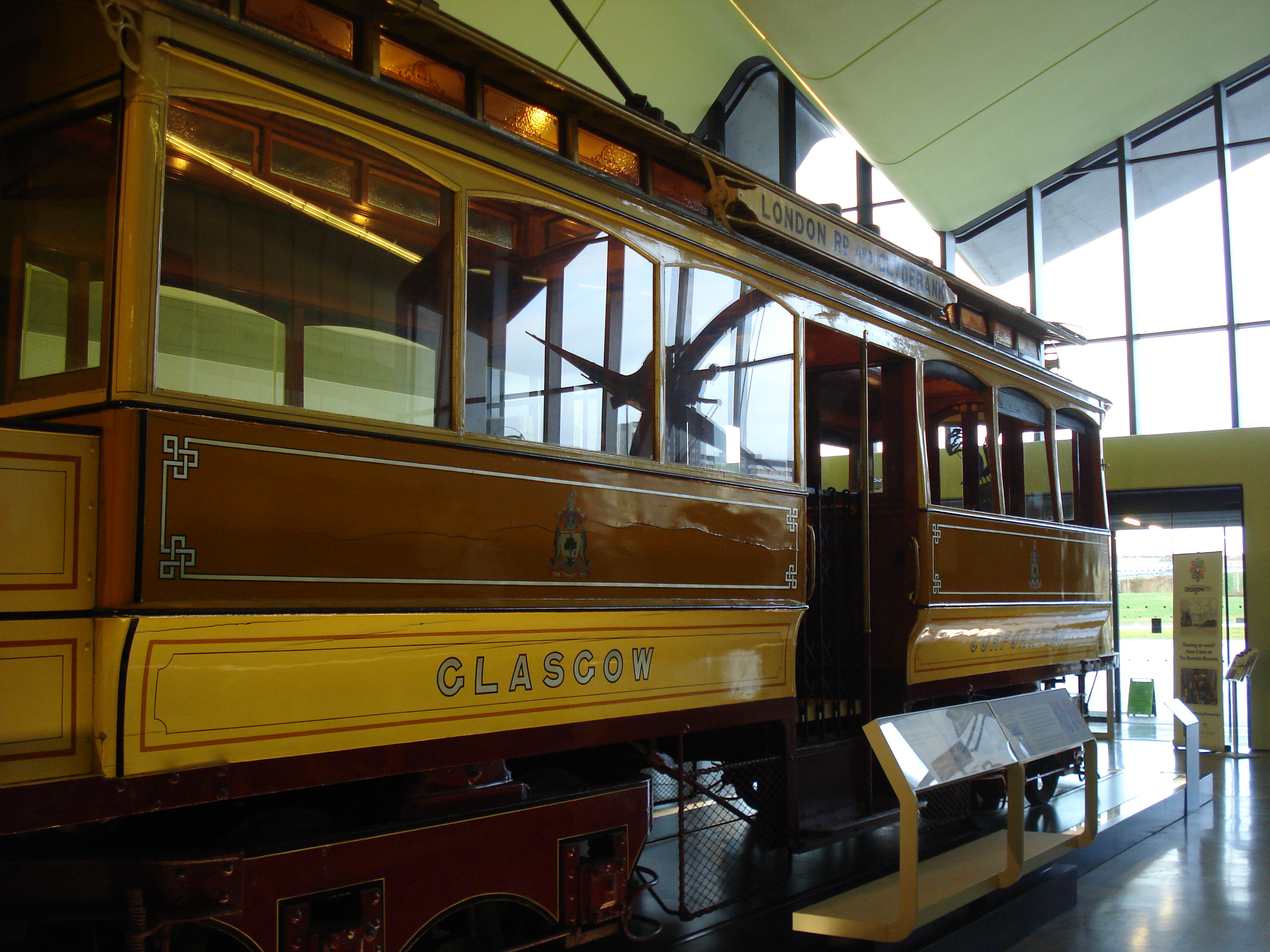
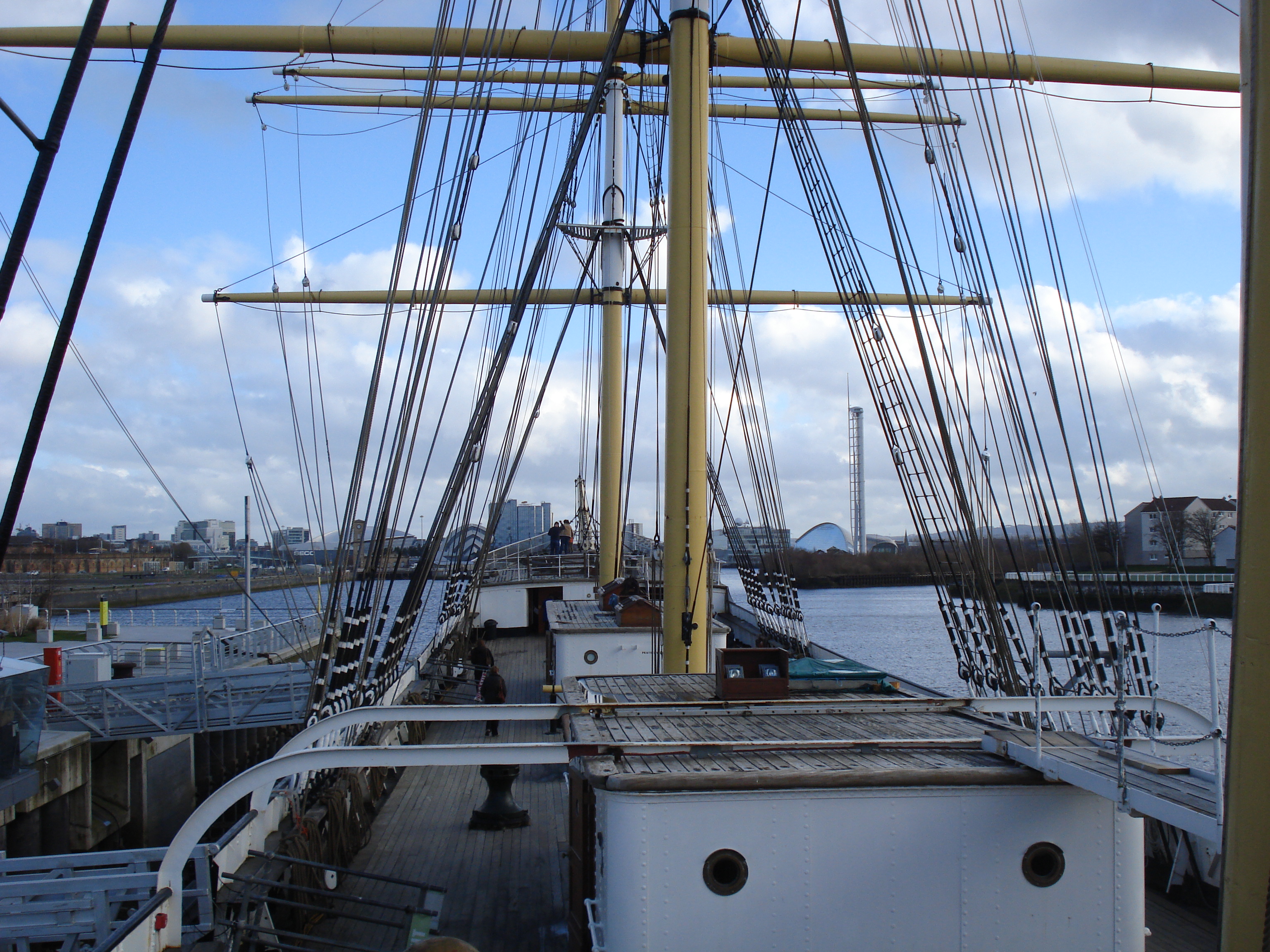
The TransPennine ‘Express’ gave up at Carlisle at 7 pm, where we were advised to ‘make our own arrangements’. For us this involved giving the rather scruffy looking County Hotel a wide berth, finding the Ibis full and following the Ibis receptionist’s advice of seeking out ‘the bed and breakfasts further down the road’. This road is Botchergate, and everyone to whom I’ve mentioned this has gone ‘oh, Botchergate!’ with a knowing expression. The full array of seedy pubs and assorted shops ranging from Bridal Wear to ‘Thongs n Things’ was revealed the following morning. You wouldn’t really choose it for a holiday, and we are unlikely to stay there ever again, but we considered ourselves fortunate to secure the grandly named four-poster room in a very small bed and breakfast in a marginally more salubrious street just off Botchergate. We headed home the following morning after doing justice to the full English. The train didn’t stop at Oxenholme, though we did ask if they could make an exception. We had to go to Lancaster and take another train back north to pick up our car at Oxenholme.
We have run two old cars for quite a number of years. The exciting news is that life will change on 1st March, when we go to pick up a new vehicle. Ladies, it is white with black trim. Guys, it is a Skoda Octavia 1.4 TSI 140 SE 5dr with dual-zone climate control, rear parking sensors, Bluetooth, DAB radio and a USB input as standard and we have taken further opportunities to ‘spec it up’. Its arrival will be timely as, on two occasions recently, our small old car’s engine has overheated dramatically, causing expense, worry and a lot of steam. The big old car, which was rather creaky in the end, now has a new owner. We were quite sad to see it go, as over the years it has taken us everywhere from Surrey in the south to the remote fringes of the Outer Hebrides in the north west. My OH has consoled himself by purchasing a complete range of extremely specialist car care products. I’m reflecting more on where our new transport of delight will take us.
25 Saturday Jan 2014
Posted in Blogging on
Oh to be in Austria, now that January’s here. There’s no better way to start the year. After thirty years of having to ski in school holidays, it’s been a pleasure for us to get on a plane in mid-January, when the only children in sight are under five or have been sneaked out of school to get the cheaper price of a ‘low season’ week. We embark in Edinburgh with other senior skiers, their ski anoraks taken out for the annual airing on the slopes. Over the years, the sun has given ours a chequered look of designer fading, but they’re much too good to discard, and British too – remember the company called Phoenix?
Clad in unfaded luminous green, our cheerful band of ski reps meets and greets in Innsbruck. They look as if they’re straight out of school and are full of superlatives. ‘Awesome!’ they cry, as someone hands them a pen for their checklist. Ignoring the high average age bracket of the clients on our coach, our rep insists on highlighting the truly excellent pubs and clubs to be had in our resort of Sölden. It will all be awesome, brilliant, incredible and more besides.

I’d been to Sölden in 1977, when I lived in Munich. Some German friends were skiing there, and invited me down for the weekend, so I headed over the Alps in my Mini. I wasn’t a skier back then, but they did take me up to Hochsölden and put me on skis, which I handled with no skill whatsoever. We went up in a single chair lift, and I have a memory of a blanket being thrown over my legs to keep me warm. Sölden now boasts the usual eight-seater gondolas and ‘six-pack’ chairs with heated seats and hoods to protect from bad weather. It’s a most impressive lift system, taking us right up to the Tiefenbach and Rettenbach glaciers at 3000 feet.
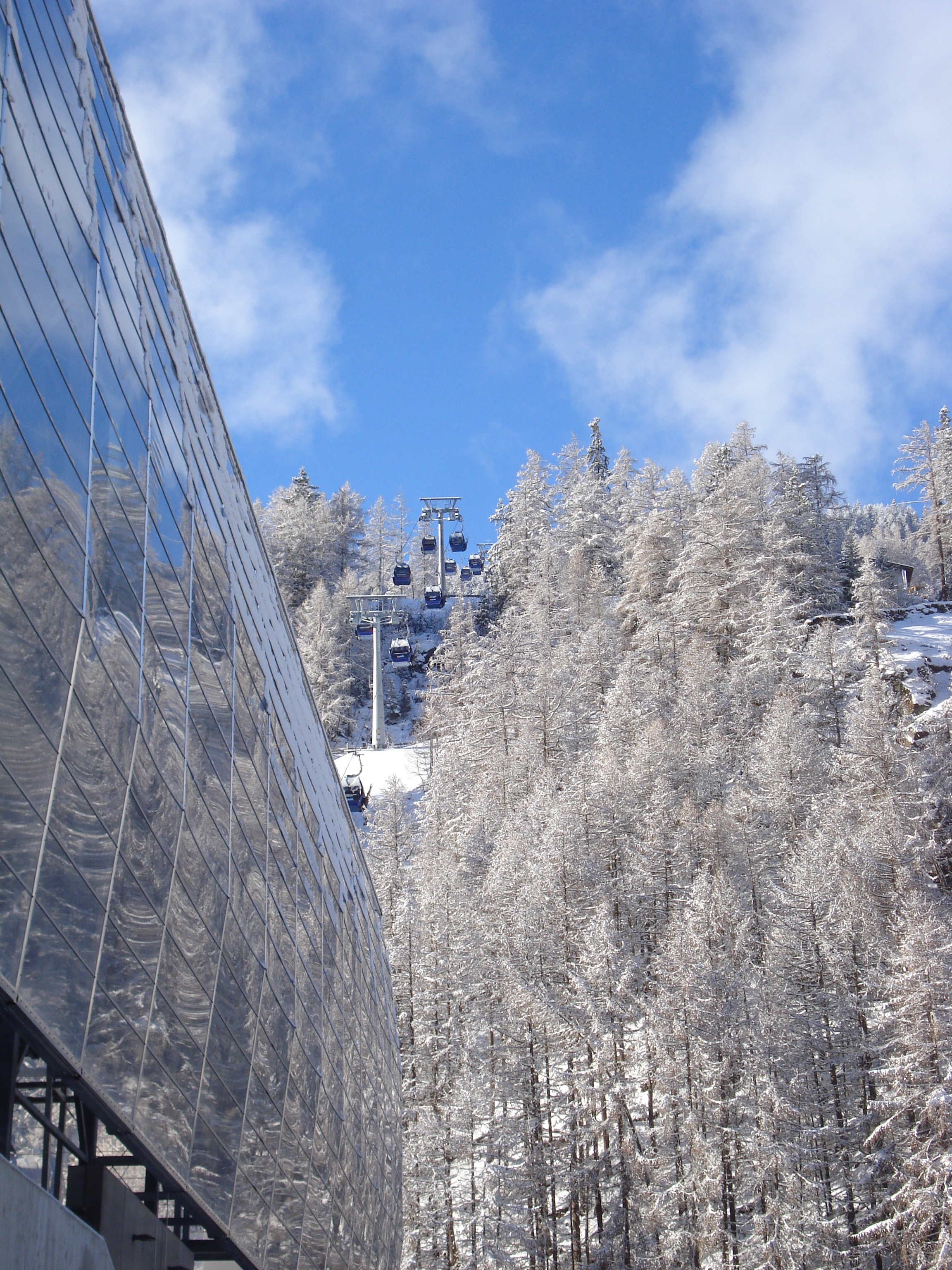
Up and away
The other big change is the clientèle. Back in 1977, the Germany where I lived was West Germany, and there was never a thought of meeting any Russians, Hungarians, Romanians – or indeed any East Germans. Now they’re all playing happily on the slopes of Sölden, and you’re as likely to find a menu in Russian as one in English.
Our hotel was a bit of a linguistic mêlée. Our room maid was from Italy. ‘Buongiorno!’ we cried, on our way down to breakfast. ‘Smakelijk!’ said the Dutch waitress in the dining room. The dining room was like a line-up for the Eurovision Song Contest, with Ukraine to our right and Switzerland to our left. The Netherlands occupied the far corner, next to Russia, then came Germany and two more British tables. Mid-week we were treated to a special Italian buffet. German and English were the hotel’s in-print languages. The English had been fast-pressed by Google translate, which led me to think that a lot of non-native English speakers were learning some very wrong expressions and that this could lead to some interesting distortion of the English language in years to come. We were, for example, urged to ‘use water with parsimony’ in a crusade to help the environment. Unfortunately, we hadn’t packed any. Having said all this, it was one of the best hotels we’ve stayed in – small, friendly and family run, with spacious rooms, designer cuisine, a good wine cellar and a quiet location away from the pubs and clubs. You can’t beat Austria for this kind of establishment.
Since my first visit to Sölden in 1977 I’ve learned to ski properly and get up some speed. Back then, the only speeding I did was on the way home to Munich, where I remember being fined 80 Schillings for a little too much acceleration through the village of Langenfeld. I don’t think there’s any better feeling than getting up some speed on a sunny day. Ski lifts also take you to high places and stunning views. And then there are the restaurants and mountain huts, the Apfelstrudel and Germknödel, the blaring Tyrolean music and Europop. Somehow the sense of concentrating on just a few essentials comes to the fore – eat, sleep, play and turn your face to the sun. I’ll be doing it as long as my limbs hold out. Awesome indeed.
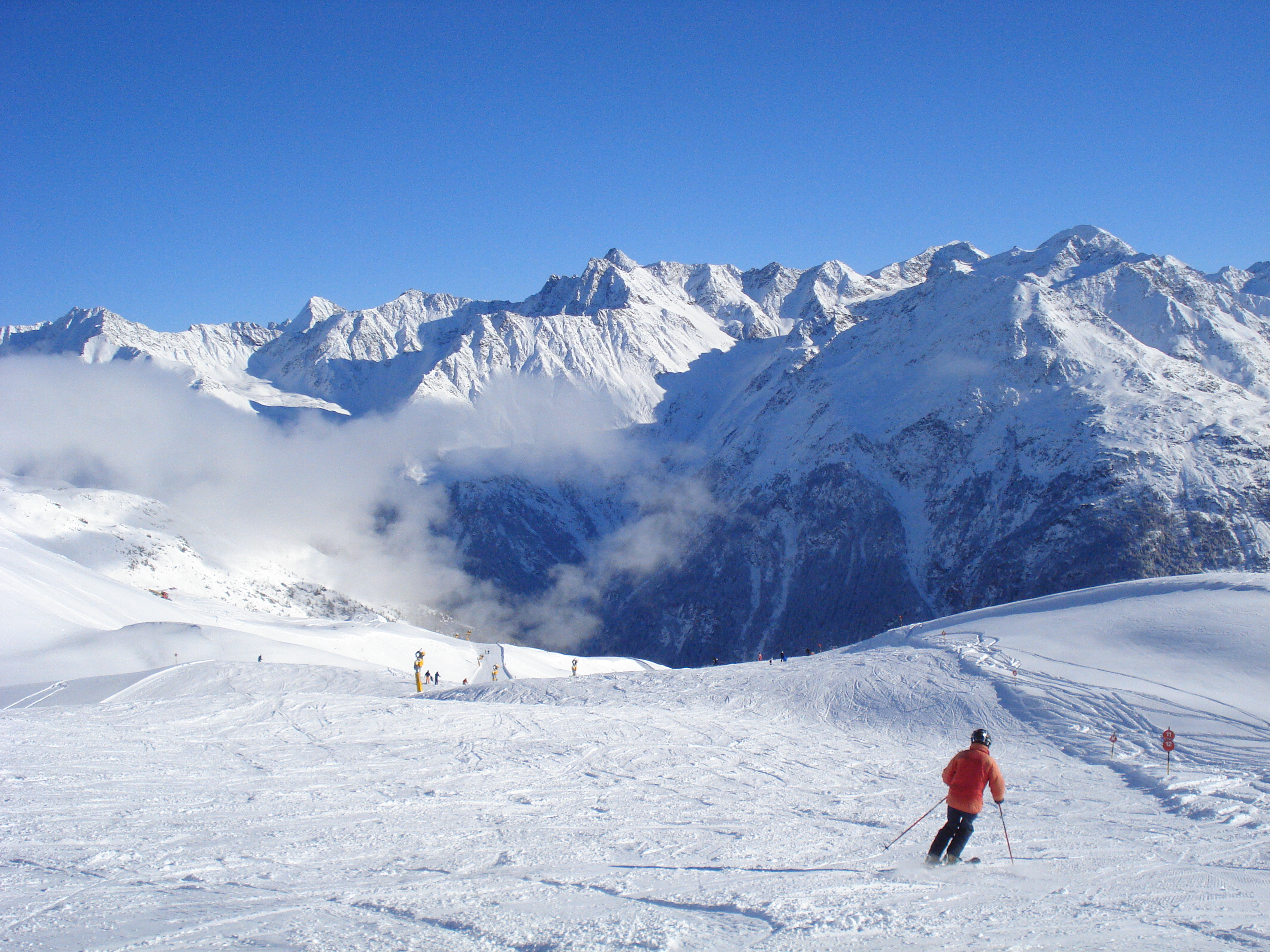
25 Saturday Jan 2014
Posted in Writing News
I’ve been featured again on Ink Pantry Press’s ‘Tuesday Teaser’. This time it’s about a poem which was selected for their anthology Fields of Words.
http://inkpantry.com/blog/tuesday-teaser-poem-by-christine-cochrane/
23 Monday Dec 2013
Posted in Blogging on
It’s been busy! I’ve been playing Christmas music on the harp and I’ve sung carols with my choir at a concert and at the local shopping centre to raise money for the Philippines. Music is for me one of the most important aspects of the lead-up to Christmas. The other special things are the connection with friends and family and the memories of times past. So I share now a window into my childhood Christmases in rural North East Scotland, quite a few years ago ….

When the nights became dark and the stars shone as we returned from school, we began to think about Christmas. The fields would be hard with frost, and a day would come when we’d open the kitchen door and smell the rich spices of Christmas puddings; they’d be bubbling in a pan on the stove, and the windows would stream with condensation. It was around then that my mother would begin her nativity play rehearsals. My striped bedspread would be taken for Joseph’s robe. The angels brought their own sheets, but we’d help my mother make the haloes by twisting tinsel round wire attached an Alice band. The shepherds’ outfits were dressing gowns and checked tea-towels. The Hon. Mrs L, who had lived abroad, provided evening capes from the Far East for the exclusive use of the kings. I recognised her daughter years later at a dinner dance, wearing a shimmering blue cape that my brother had once worn in his role as third king.
My father wrote the scripts for the plays; they did not stray far from the words of the King James Bible, for which he had the greatest respect. We never had a doll for Jesus; that was regarded as inappropriate. The baby was just said to be down there in the manger among all the straw from the nearest farm. Everyone came to church at Christmas, even if they didn’t attend for the rest of the year. Light shone in the darkness, and we were happy.

Enjoy Christmas day, and the memories it brings.
 Harping On